
Signs Your Nervous System Might Be Holding Trauma (And What Helps)
When "I'm Fine" Doesn't Match How Your Body Feels
Have you ever told yourself that the difficult experience happened years ago, yet your body still reacts as though something is wrong?
Trauma isn't stored as a conscious memory alone. It often lives within the nervous system. Even when we understand logically that we're safe, our body may continue carrying patterns that developed during overwhelming experiences.
The body remembers what the mind has tried to move past.
What Does It Mean to "Hold Trauma"?
Trauma is less about what happened and more about what happened inside the nervous system when the experience occurred. When the nervous system doesn't fully process an overwhelming experience, survival responses can remain active. This may create symptoms that seem unrelated to trauma.
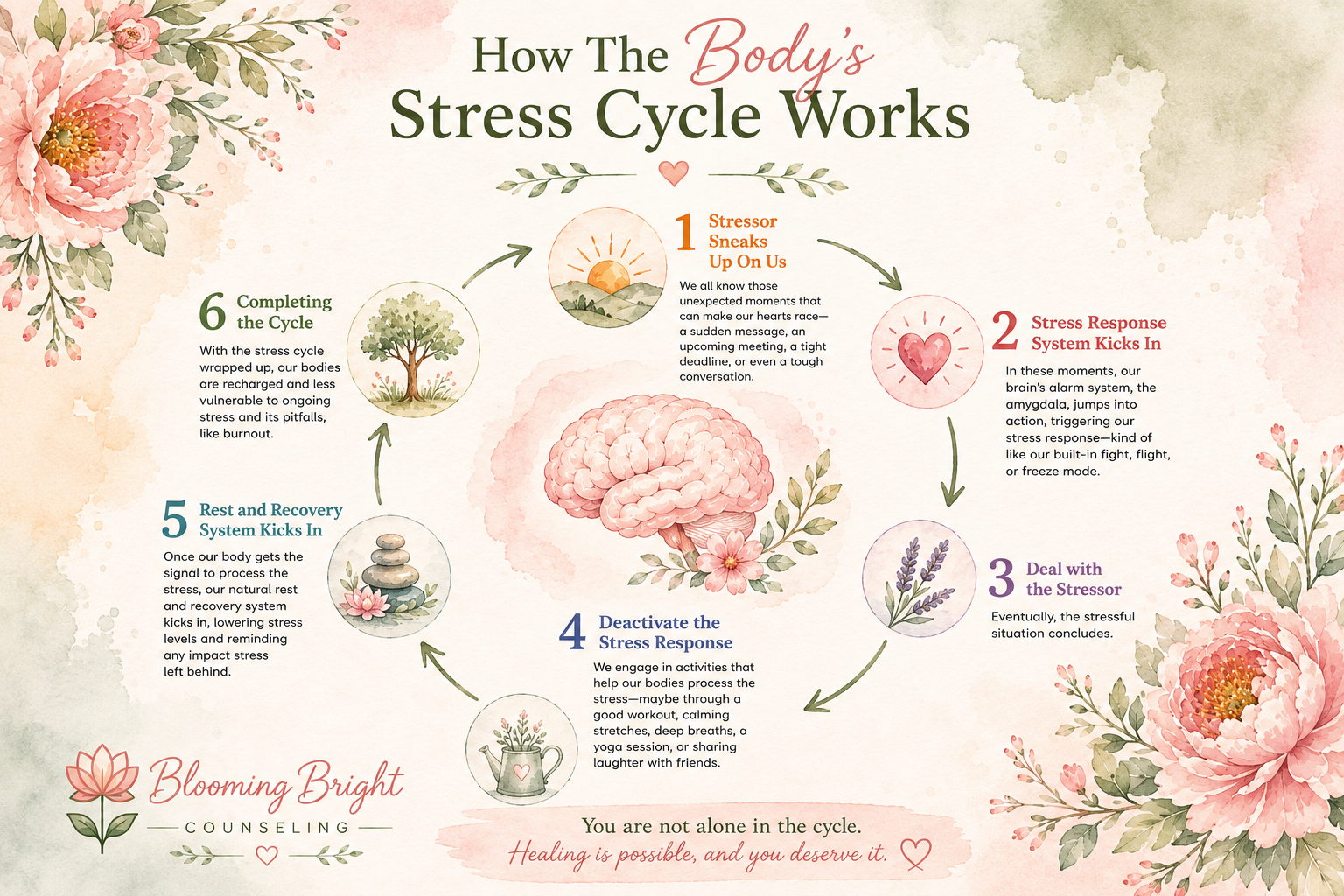
Common Signs Your Nervous System May Be Holding Trauma
You Feel Constantly "On"
Always busy
Difficulty relaxing
Trouble resting
Feeling guilty when slowing down
You Feel Constantly "Off"
Fatigue
Numbness
Low motivation
Disconnection from emotions
Small Stressors Feel Huge
You may find yourself overwhelmed by situations that others seem to handle easily.
You Struggle With Safety
You may:
Expect the worst
Overprepare
Assume rejection
Have difficulty trusting
You Experience Physical Symptoms
Tight shoulders
Jaw clenching
Digestive issues
Chronic tension
Frequent headaches
You Disconnect Under Stress
This may look like:
Zoning out
Brain fog
Forgetfulness
Feeling detached
What Actually Helps?
1. Safety Before Processing
Healing begins with creating safety, not forcing yourself to revisit trauma. In EMDR and trauma therapy, before any processing of unpleasant memories begin, we start with Resourcing, or developing your coping skill toolbox. A good place is creating your Safe/Calm place, a mindfulness exercise of imaging a place that brings comfort. We focus on all of your senses when we imagine that place, and incorporate bilateral stimulation (eye movement, or tapping). This along with other exercises we practice together help regulate your nervous system and keep you in your window of tolerance when processing such memories.
#1 Rule is safety first.
2. Regulation Before Insight
You do not need to understand every trauma response before your body begins feeling better. Regulation often comes first.
Take a moment to notice where and what you are feeling in your body. Progress from paying attention to the tip of your toes moving to the top of your head, taking note of any sensations (comfortable or uncomfortable). This awareness is the first step in creating an opportunity to release what your body is holding onto and regulating your nervous system.
3. Gentle Body-Based Practices
Examples include:
Walking
Stretching
Rocking
Deep pressure
Grounding exercises
Sensory supports
Vocalizing (singing, humming, growling)
4. Co-Regulation
Did you know that when two individuals share a common experience, their heartbeats can become synchronized in a phenomenon known as cardiac physiological synchrony? Our bodies heal in connection. Safe relationships help the nervous system learn that it no longer has to carry everything alone. Being around someone you care about who is in a regulated nervous system state can lower your heart rate and decrease your stress hormones. However, the opposite can also be true. When you surround yourself by others who are highly stressed, your body matches their arousal instead of regulating, which leads to biological ‘flooding’ and can increase conflict and physical stress symptoms.
5. Trauma-Informed Therapy
Approaches such as:
EMDR
Somatic Experiencing
Trauma-focused CBT
Attachment-focused work
can help the nervous system complete unfinished survival responses.
Healing Is Not Becoming Calm All the Time
Healing means having flexibility, its about the ability to transition back and forth more easily. You can experience stress without remaining stuck there. Your nervous system learns how to return to safety more easily.
Reflection …
What symptoms have you been treating as personal flaws that might actually be signs of a protective nervous system?
