
How Trauma Affects the Brain
Understanding Why Trauma Is More Than a Memory
Many people think trauma is simply a painful event that happened in the past. In reality, trauma affects the way the brain and nervous system develop, process information, and respond to the world long after the event is over.
Whether trauma occurs during childhood, adolescence, or adulthood, it can change how we experience safety, relationships, emotions, and even our own bodies. Understanding these changes can help replace shame with compassion and open the door to healing.
🌳Trauma Changes the Brain's Primary Job: Survival
Your brain is designed to keep you alive.
When something overwhelming, frightening, or unsafe happens, the brain shifts into survival mode. The nervous system releases stress hormones that prepare the body to fight, flee, freeze, or fawn.
In healthy situations, the brain eventually recognizes that the danger has passed and returns to a regulated state. Trauma can interrupt this process. Instead of filing the experience away as a completed memory, the brain may continue reacting as though the threat is still present.
This isn't a personal weakness. It's a survival adaptation.
🧠The Three Main Brain Areas Affected by Trauma
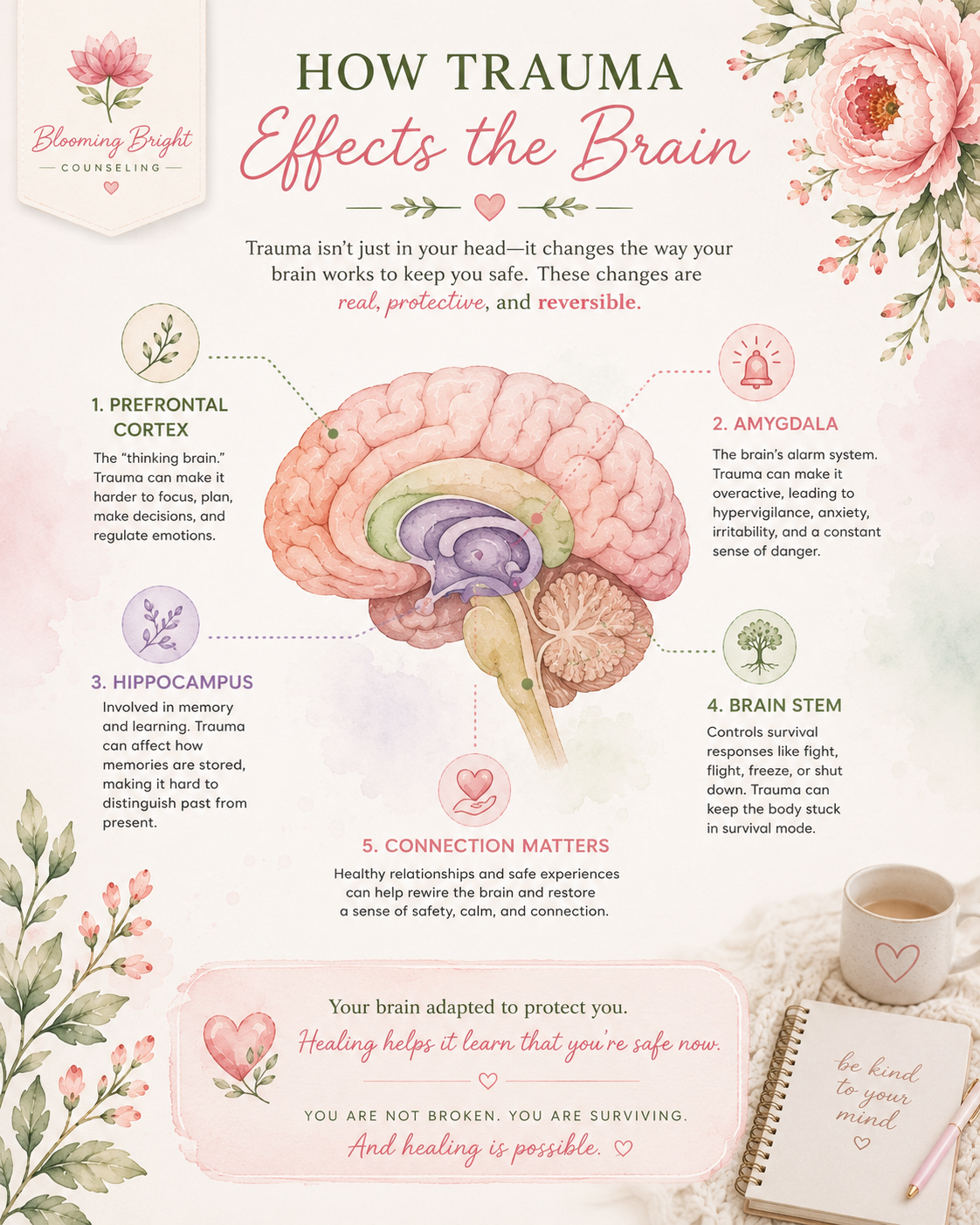
The Amygdala: Your Alarm System
The amygdala scans for danger.
After trauma, the amygdala often becomes overactive. It begins looking for threats everywhere—even when you're objectively safe.
This can lead to:
Hypervigilance
Anxiety
Startle responses
Difficulty relaxing
Constant worry
Feeling "on edge"
Many trauma survivors describe feeling exhausted because their brain is working overtime to protect them.
The Hippocampus: Your Memory Organizer
The hippocampus helps organize memories and distinguish between past and present.
Trauma can make it difficult for the hippocampus to properly process experiences.
As a result:
Trauma memories may feel vivid and current
Triggers can create strong emotional reactions
Flashbacks may occur
Time can feel distorted
Instead of feeling like "something that happened," trauma can feel like "something happening now."
The Prefrontal Cortex: The Thinking Brain
The prefrontal cortex helps with:
Decision making
Emotional regulation
Problem solving
Impulse control
Perspective taking
When the nervous system senses danger, the brain temporarily reduces access to this area.
This is why people often say:
"I know I'm safe, but I don't feel safe."
"I overreacted and don't know why."
"My emotions took over."
The survival brain is faster than the thinking brain.
🌱How Childhood Trauma Affects Development
Children's brains are still developing. When chronic stress, neglect, abuse, medical trauma, bullying, family conflict, or other overwhelming experiences occur repeatedly, the developing nervous system learns important lessons about the world.
Children may begin to believe:
The world is unsafe.
People cannot be trusted.
My needs don't matter.
I must stay alert to survive.
I am responsible for others' emotions.
These beliefs are not conscious choices. They are adaptations that helped the child navigate difficult circumstances.
Over time, these patterns can continue into adulthood.
🌤️Trauma Can Affect Daily Functioning
Trauma isn't always obvious.
Many adults seeking therapy don't initially identify their struggles as trauma-related.
Trauma can show up as:
Emotional Symptoms
Anxiety
Depression
Irritability
Emotional numbness
Shame
Difficulty trusting others
Physical Symptoms
Headaches
Muscle tension
Digestive issues
Fatigue
Sleep difficulties
Chronic pain
Relationship Symptoms
Fear of abandonment
People pleasing
Difficulty setting boundaries
Conflict avoidance
Difficulty feeling connected
Cognitive Symptoms
Brain fog
Forgetfulness
Difficulty concentrating
Racing thoughts
Negative self-talk
❤️🩹The Good News: The Brain Can Heal
One of the most hopeful truths about neuroscience is neuroplasticity. The brain continues changing throughout life.
With safety, supportive relationships, therapy, and nervous system regulation, the brain can build new pathways that support healing.
Trauma may have shaped your nervous system, but it does not define your future.
🍃How EMDR and Trauma Therapy Help
Trauma therapies such as EMDR and Somatic Experiencing help the brain process experiences that became "stuck" in the nervous system.
Rather than forcing someone to relive trauma, therapy helps the brain:
Reprocess overwhelming memories
Reduce emotional intensity
Build internal safety
Strengthen coping skills
Create healthier beliefs about self and others
Healing is not forgetting what happened.
Healing is helping your brain recognize that the danger is over.
✨Reflection…
What if the behaviors you criticize most about yourself are actually signs of a nervous system that has been working very hard to protect you?
