
Back-to-School Tips for Neurodivergent Kids, Teens, and Families
A New School Year Brings More Than New Supplies
The first day of school is often viewed as an exciting fresh start—new backpacks, sharpened pencils, smiling class photos, and endless possibilities. While those moments can certainly be joyful, they don't tell the whole story.
For many children, teens, and families, back-to-school season also brings uncertainty, stress, and big emotions. Even positive changes require adjustment. New teachers, unfamiliar classmates, different expectations, shifting routines, increased academic demands, and busy schedules can feel overwhelming, especially for neurodivergent children or those with anxiety or trauma histories.
If your child seems more emotional, irritable, worried, or resistant as the school year approaches, it doesn't necessarily mean something is wrong. Their brain and nervous system may simply be working hard to adapt.
At Blooming Bright Counseling, we believe that successful school transitions aren't about pushing children to "just get over it." Instead, we focus on creating environments where children feel safe, supported, understood, and prepared to navigate change.
The goal isn't a perfect first week. The goal is helping children build confidence one day at a time.
Why Back-to-School Feels So Overwhelming
Returning to school asks children to make dozens of adjustments all at once.
They may be expected to:
wake up earlier
tolerate increased sensory input
navigate social situations
follow new classroom expectations
remember schedules
shift between multiple subjects
complete homework
regulate emotions throughout the day
separate from caregivers
manage transitions independently
That's a a lot of work for developing brains. For children with ADHD, autism, anxiety, sensory sensitivities, or executive functioning differences, these demands require even more mental energy. Understanding this helps us respond with compassion instead of frustration.
Every Child Responds Differently
Some children appear excited but become exhausted after school. Others become tearful before leaving the house. Some may complain of headaches or stomachaches. Others become unusually silly, argumentative, or withdrawn.
These behaviors aren't signs of failure. They're often signs that the nervous system is working overtime.
What Happens in the Brain During Stress?
When children feel safe, the brain is able to learn, problem-solve, remember information, and regulate emotions. When stress becomes too high, the brain shifts into survival mode.
Children may:
struggle to concentrate
forget instructions
become impulsive
shut down
cry easily
become irritable
avoid schoolwork
experience emotional outbursts
These reactions aren't choices; they're protective responses from a nervous system that perceives increased demands. Supporting regulation first often improves learning naturally.
Tip 1: Start Adjusting Routines Before School Begins
One of the biggest stressors isn't school itself—it's the sudden change in routine. Rather than waiting until the night before school starts, begin making gradual changes one to two weeks in advance.
Try adjusting:
bedtime by 15–30 minutes every few days
wake-up times
meal schedules
screen time
morning routines
Small changes are easier for the brain to adapt to than dramatic overnight shifts.
Tip 2: Practice the Morning Routine
Children often hear instructions like:
"Get dressed."
"Brush your teeth."
"Pack your backpack."
But during busy mornings, executive functioning can become overwhelmed. Instead of assuming they'll remember every step, practice the routine several times before school starts. Visual checklists can be especially helpful.
The goal isn't dependence, it's reducing unnecessary mental load.
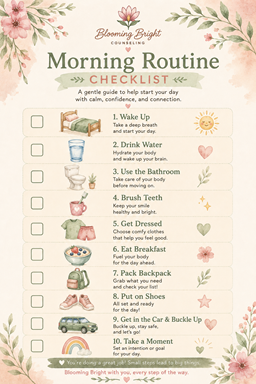
Click here for a free printable Morning Routine Checklist.
Tip 3: Visit the School if Possible
Uncertainty often increases anxiety. Many schools offer opportunities to:
tour the building
meet teachers
locate classrooms
practice walking to the cafeteria
find bathrooms
explore playgrounds
Even driving by the school several times before the first day can help the brain become more familiar with the environment. Familiarity creates safety.
Tip 4: Talk About Feelings Without Trying to "Fix" Them
Children don't always need reassurance. Sometimes they simply need someone who listens.
Instead of saying:
"You'll be fine."
Try:
"It makes sense that you're feeling nervous. New things can feel hard."
Or:
"Tell me what you're most worried about."
Feeling understood often reduces anxiety more effectively than trying to convince children they shouldn't feel anxious.
Tip 5: Prepare for Sensory Needs
School environments are full of sensory input: bright lights, crowded hallways, loud cafeterias, uncomfortable clothing, unexpected noises, weird smells, and busy classrooms. Children with sensory sensitivities may benefit from discussing what helps them regulate throughout the day.
Depending on the school's policies, helpful supports may include:
noise-reducing headphones during independent work
chewable sensory tools
fidgets that support focus
movement breaks
preferred clothing textures
water bottle access
quiet spaces for regulation
Small sensory supports can make a significant difference.
Tip 6: Focus on Connection Before Correction
The first weeks of school are emotionally demanding. Children often hold themselves together all day and release those emotions once they return home. This is sometimes called after-school restraint collapse.
You may notice:
meltdowns
irritability
crying
withdrawal
increased conflict
exhaustion
Instead of asking: "How was school?"
Try offering connection first.
Ideas include:
a favorite snack
quiet time
cuddling
swinging outside
drawing together
listening to music
taking a short walk
Children often share more once they feel emotionally safe.
Tip 7: Don't Overschedule the First Month
It's tempting to jump back into every extracurricular activity immediately.
However, children are already adjusting to:
academic demands
social expectations
earlier mornings
increased stimulation
homework
new routines
Leaving space for rest supports long-term success. Sometimes doing less helps children do better.
Tip 8: Build Executive Function Supports Into Daily Life
Executive functioning skills continue developing into early adulthood. Children don't naturally remember every assignment or organize every material independently. Support isn't "doing it for them” or shaming them for forgetting their routine or tasks; it’s teaching supportive systems.
Helpful tools include:
visual planners
color-coded folders
homework checklists
reminder alarms
family calendars
backpack packing routines
homework baskets
External systems support developing brains.
Tip 9: Partner With Teachers
Teachers want children to succeed. Sharing helpful information early can create a stronger partnership.
Consider communicating:
calming strategies that work
sensory needs
executive functioning challenges
communication preferences
emotional triggers
strengths and interests
accommodations your child benefits from
Approaching teachers as teammates often leads to more collaborative problem-solving.
Tip 10: Celebrate Effort More Than Outcomes
Children hear enough messages about grades and performance, they also need to know that effort matters.
Instead of focusing only on:
test scores
completed homework
perfect behavior
Celebrate:
asking for help
trying something new
recovering after a difficult day
practicing coping skills
showing kindness
solving problems
persisting through challenges
These skills support lifelong resilience.
Supporting Children With ADHD
Children with ADHD often experience:
time blindness
forgetfulness
difficulty shifting attention
emotional intensity
task initiation struggles
Helpful supports include:
visual timers
consistent routines
breaking homework into smaller pieces
movement breaks
body doubling during homework
reducing distractions
offering choices when possible
Remember: ADHD isn't a lack of motivation - it's a difference in how the brain manages attention and executive functioning.
Supporting Autistic Children
Many autistic children thrive with predictability.
Helpful supports include:
visual schedules
advance notice before changes
sensory regulation tools
practicing new routines
explaining what to expect
allowing recovery time after school
honoring communication differences
Flexibility grows best when children first experience consistency and safety.
Supporting Children With Anxiety
Anxiety often asks: "What if something goes wrong?" Help children answer that question with confidence. Instead of providing endless reassurance, practice coping skills and processing their worry/fears.
For example:
"What could you do if you felt nervous at lunch?"
"Who could you ask for help?"
"What has helped before?"
Teaching coping builds confidence more effectively than eliminating uncertainty.
Create an After-School Reset Routine
Children often need time to transition before homework begins. Consider a predictable rhythm found in the free printable After-School Reset Routine download.
Predictable routines help the nervous system know what comes next.
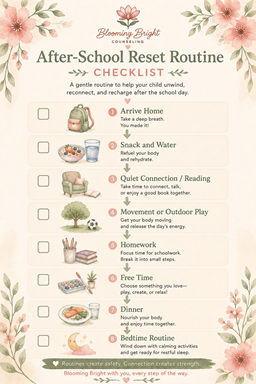
Click here for a free printable After-School Reset Routine Checklist.
When to Seek Additional Support
It's normal for children to experience some nervousness during the first few weeks of school.
However, additional support may be helpful if your child experiences:
persistent school refusal
severe separation anxiety
panic attacks
ongoing sleep difficulties
frequent physical complaints without medical cause
significant behavioral changes
intense emotional outbursts lasting several weeks
declining mood or withdrawal
overwhelming academic stress
Therapy can help children develop coping skills while supporting parents in understanding what their child's behavior is communicating.
Early support often prevents small challenges from becoming larger ones.
A Gentle Reminder for Parents
You don't have to create the perfect morning routine.
You don't have to eliminate every meltdown.
You don't have to know exactly what to say every time your child is struggling.
What children remember most is not whether every lunch was perfectly packed or every homework assignment was completed without reminders.
They remember how they felt.
They remember whether someone believed them when things felt hard.
They remember whether home was a place where they could exhale after a long day.
Your calm presence, willingness to listen, and consistent support are some of the most powerful tools you have.
Try This before school starts:
Choose one back-to-school strategy to focus on.
Ask yourself:
What part of the day feels most stressful?
What would make this routine more predictable?
Does my child need more information, more support, or more time?
What is one small change we can practice together?
Small, consistent changes are often more effective than trying to change everything at once.
About Blooming Bright Counseling
At Blooming Bright Counseling, we provide trauma-informed, neurodiversity-affirming therapy for children, teens, adults, and families across Texas. We understand that school transitions can bring unique challenges, especially for children navigating ADHD, autism, anxiety, trauma, or executive functioning differences.
Using evidence-informed approaches including EMDR, Cognitive Behavioral Therapy (CBT), Somatic Experiencing®, expressive arts, and play therapy, we help children and families build practical skills for emotional regulation, resilience, confidence, and connection.
Whether your family is preparing for the first day of kindergarten, navigating the transition to middle school, or supporting a teen through increasing academic pressures, you don't have to do it alone.
If your child is struggling with school transitions, anxiety, emotional regulation, or executive functioning, Blooming Bright Counseling is here to help. Together, we can create personalized strategies that help your child feel safe, supported, and ready to thrive—both in and out of the classroom.
Disclaimer: This article is for educational purposes only and is not a substitute for individualized mental health or medical care. If you have concerns about your child's emotional well-being or development, consult a qualified healthcare or mental health professional.
